
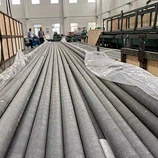
ASTM A249 TP304 Aluminum L-Fin Finned Tube for Heat Exchangers
Overview: The Cost-Effective Standard for Clean-Service Heat Recovery
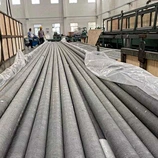
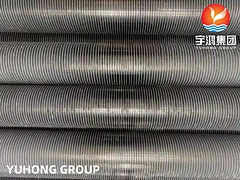
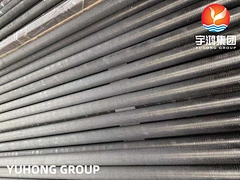
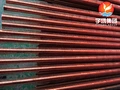
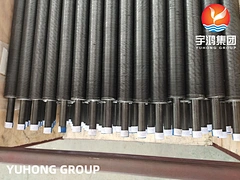
ASTM A249 TP304 Aluminum L-Fin Finned Tube is a composite heat transfer element designed for the widest range of moderate-temperature heat exchangers, air coolers (fin-fan coolers), and HVAC systems. The base tube is a welded austenitic stainless steel tube manufactured to the ASTM A249 standard, selected for its corrosion resistance in industrial atmospheres and its excellent formability for fin wrapping. The fin is an aluminum strip (typically 1060 or 1100 alloy) tension-wound around the tube, with an L-shaped foot that covers the base tube surface to maximize heat transfer contact.
In the engineering reality of heat exchanger fabrication, the L-fin is not the absolute highest-performing fin profile; it is the most economically rational choice for a defined boundary of operating conditions. It solves the problem of how to increase the air-side or gas-side heat transfer area by 8 to 12 times without incurring the high manufacturing cost of solid extruded (bimetallic) fins or the heavy thermal-mechanical stress of high-frequency welding (HFW). For project engineers and procurement managers, specifying L-fin TP304 tubes delivers rapid, cost-effective heat transfer enhancement for clean gases and fluids where the tube wall temperature remains below the aluminum fin's mechanical limits.
The critical boundary condition: The L-fin relies on residual tension at the fin foot to maintain contact with the base tube. It is not a metallurgical bond. Therefore, it is not suitable for flue gases with heavy ash/soot, not suitable for temperatures exceeding ~200°C (where differential thermal expansion causes the fin to loosen), and not suitable for highly corrosive chemical environments where the exposed aluminum fin and the fin-foot crevice would fail. This article addresses the exact applications where L-fin TP304 is the right specification—delivering maximum heat transfer per dollar.
Application & Compliance: Where L-Fin Excels
1. Air Coolers (Fin-Fan Coolers) and Condensers
Working Scenario: Cooling process fluids, lube oil, or steam in refineries, chemical plants, and power stations using ambient air forced across the finned bundle by large fans.
What it solves: The L-fin provides a massive external surface area to compensate for the relatively low heat transfer coefficient of air. It allows for a compact, lightweight bundle design. Because the medium inside the TP304 base tube is often a clean fluid, the external atmospheric corrosion is manageable with the standard aluminum fin.
2. Heating, Ventilation, and Air Conditioning (HVAC)
Working Scenario: Steam heating coils, hot water coils, and cooling coils in large commercial or industrial ventilation systems.
What it solves: Tension-wound L-fins are exceptionally economical to manufacture in high volumes. For HVAC applications operating well below 150°C, the fin bond is perfectly stable, and the pressure drop across the finned bundle remains predictable, ensuring quiet, efficient air handling.
3. Clean Gas Heat Recovery and Drying Systems
Working Scenario: Exhaust gas heat recovery from natural gas engines, clean combustion processes, or industrial drying ovens where the gas contains no abrasive ash, soot, or unburned particulates.
What it solves: It provides the necessary thermal efficiency to recover waste heat and reduce energy costs. The TP304 base tube offers adequate oxidation resistance and structural integrity at moderate operating temperatures (e.g., 150–250°C) where carbon steel tubes would require corrosion allowances.
4. L-Fin vs. Alternative Fin Profiles: The Decision Matrix
Choosing between L-fin, G-fin (embedded), and HFW (welded) is a classic procurement decision balancing CAPEX and OPEX.
| Criterion | L-Fin (Tension Wound) | G-Fin (Embedded) | HFW / Laser (Welded) |
|---|---|---|---|
| Manufacturing Cost | Lowest | Moderate | High |
| Max Fin Operating Temp | ~150°C - 200°C | ~250°C - 300°C | 400°C+ (depends on material) |
| Fin Bond Reliability | Relies on tension | Mechanical embedment | 100% Metallurgical weld |
| Thermal Cycling Tolerance | Poor (loosens under cycling) | Good | Excellent |
| Dirty Gas / Fouling Tolerance | Low (requires clean service) | Good | Moderate |
| Best Application | HVAC, Air Coolers, Clean Gas | Boiler Economizers, moderate fouling | High-temp exhaust, severe vibration |
Technical Specifications & Material Data
1. Dimensional & Mechanical Properties
| Parameter | Specification |
|---|---|
| Base Tube Standard | ASTM A249 / ASME SA249 |
| Base Tube Grade | TP304 (Welded Austenitic) |
| Base Tube OD | 15.88 mm – 38.1 mm (5/8"– 1.5") |
| Base Tube Wall | 1.2 mm – 2.5 mm |
| Fin Material | Aluminum 1060 / 1100 |
| Fin Type | L-foot, tension wound |
| Fin Height | 8 mm – 16 mm |
| Fin Thickness | 0.3 mm – 0.5 mm |
| Fin Pitch (FPI) | 7 – 11 fins per inch |
| Max Continuous Temp | ≤ 200°C (in clean air/gas) |
| Tube Length | Up to 18,000 mm (custom cut) |
2. Chemical Composition (Base Tube TP304)
| Element | C (max) | Mn (max) | P (max) | S (max) | Si (max) | Cr | Ni |
|---|---|---|---|---|---|---|---|
| TP304 | 0.08 | 2.0 | 0.045 | 0.030 | 1.0 | 18.0-20.0 | 8.0-11.0 |
QA/QC & Certifications: Ensuring Fin Bond Integrity
The L-fin's weakness is that a poorly tensioned fin will detach during transit or thermal expansion. Our quality control focuses on the physical bond.
Fin Pull Test: Sample fins from every production batch are pulled to verify the tension winding force meets standard requirements (typically > 30 N for L-fin).
Weld Integrity (Base Tube): ASTM A249 welded tubes are subjected to 100% eddy current testing or hydrostatic testing to guarantee a leak-free pressure boundary.
Material Traceability: EN 10204 3.1 Mill Test Certificates for both the TP304 base tube and the aluminum strip, verifying alloy grades.
Dimensional Inspection: Fin pitch, fin height, and bare-end length verified against drawings.
Visual Inspection: Ensuring the L-foot overlaps correctly without tearing at the fin root.

Comprehensive score